Saturday, January 8, 2011

The Gypsy has Landed

I know it's been a while since my last post, and to all those who commented and kept on visiting, I really appreciate it!

Not in Kansas anymore!

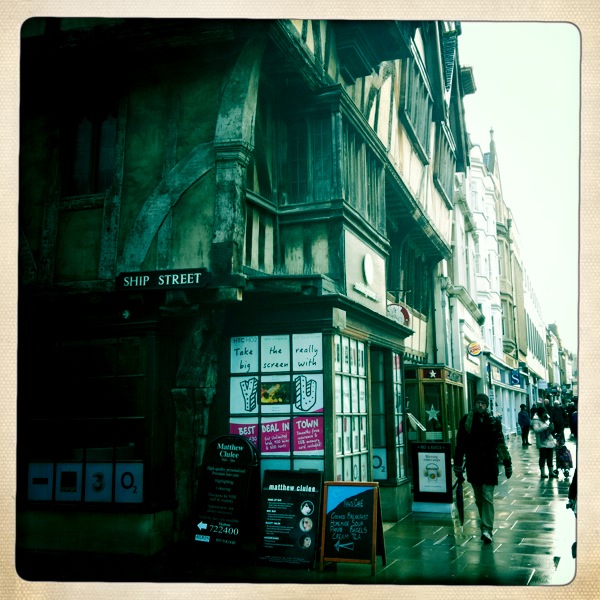
So, I have landed in Oxford England, far from my tropical home.  Just about as far as you could get in terms of weather, culture and development! I am here to work for Oxfam, so through that I will at least still be in touch with my beloved tropics and life in what some people might call "the majority world" - that is, the parts of the Earth where the majority of the population of our planet live.

Perhaps you have seen this before:

If the world were a village of 100 people:

61 would be Asians, 12 Europeans, 8 North Americans, 5 South American and the Caribbean, 13 would be Africans and 1 would be from Oceania.

20 people own 75% of the entire world income.

80 would live in substandard housing

24 would not have any electricity (And of the 76% that do have electricity, most would only use it for light at night.)

67 would be unable to read.  

Only 1 would have a university education.

50 would be malnourished and 1 dying of starvation.

33 would be without access to a safe water supply.

What always strikes me when I return to Europe or North America is just how much we take for granted the privileges of our every day lives.  We view these things not as a luxury, but as a basic entitlement: housing, running water, education.  In our commercialized world, we buy goods without thinking of whether or not we really NEED them.  In some places people have to count every penny they earn and spend, feeding their families on less than the equivalent of $1 or $2 per day.

Today as I wandered the streets of my new home - exploring, shopping (sweaters! socks!), walking, I can't help but feeling like a stranger in a strange land, or like the children from the Chronicles of Narnia - knowing there is another world out there that most people are completely unaware of.  The challenge for me will be to exist in this world mindfully - and that is where yoga will help me!

Stay tuned for more Yoga Gypsy as I discover the yoga scene in Oxford, become a yoga student again, and keep on reflecting on learning and teaching yoga, as well as development issues, mindful consumerism and a whole lot more.

It's going to be a great 2011 folks!!

~Namaste

PS: Cool bit of trivia - Amsterdam's Schipol airport has a meditation centre! How awesome is that?

Tuesday, December 14, 2010

Yoga Gypsy: A year in Review

First of all, I apologize for being an infrequent poster of late! There are big things afoot here, namely that in 2 days I am leaving East Timor, my home for the past 6.5 years, to take up a job in Oxford, England! It is a temporary move - until August next year - but a big one nonetheless as I will be moving across continents, hemispheres and, of course, climates.

Once I'm there I'll be working for Oxfam on an inter-NGO humanitarian coordination programme, which is pretty exciting.  And of course, I will continue to delve into my yoga both in real life and on this blog!

But as the move has been keeping me pretty busy, my posting will probably be sparse until then.  So here is a little end-of-year reading to keep you all busy!  I've tried to pick my favourite posts from the previous 11 months this year to give you a Year in the Yoga Gypsy.

Enjoy, happy holidays, and take care!

----------------

Yoga Gypsy - A year in review 2010

January - On Generosity, and how (not to) help in Haiti
February - Adjustments: the magic of touch
March - Yoga sequence for menstrual pain
April - Yoga for Soldiers
May - Yoga for Feet
June - Learning to Fly: Bakasana
July - 8 Goals for Africa
August - What would be your 10 minute yoga?
September - East Timor in pictures
October - Back 2 Basics: 4 simple stretches to ease back ten...
November - The cracks in everything

Saturday, December 4, 2010

12 moments - and blanks!


This week Lauren's blanks are about holidays - what better topic could there be?!


1. Holiday spirit… beaches, sun, and bbq (veggie of course!) - it's Christmas in Oz!
2. The holidays are incomplete without… Friends, food and Champagne! And of course, an exotic travel destination thrown in can never hurt, can it?
3. My favorite things to do around the holidays are: tease my baby about playing loud Christmas carols beginning in mid-November...  And although not my favourite thing, my holidays usually involve the great suitcase packing challenge.
4. A holiday tradition my family and I have is Champagne and orange juice for breakfast on Christmas day! And boxing day... and New Year's day...
5. Holiday music is playing in our house, in our car, and everywhere we go.  My girl does love her carols! ;)
6. This year, I’ll be spending the holidays with both of my families. I feel very lucky!
7. Holiday wish list if it would stop snowing in Europe and heat up to a nice sensible 24 degrees or so that would be nice... But in absence of a radical climate shift that would bring the tropics to the North, I guess good company, good food and a nice break will do. 


12 moments (an exercise in random memory association)


This is a fun little exercise that you might like to try...  It's very simple, just write down a number and then the first thing that pops into your head.

1 = number of siblings I have (one little sister!)
2 = eyes, ears, arms and legs. Lucky I am!
3 = beings in my house (2 people and a cat!)
4 = weeks until the new year... how does time fly so fast?
5 = years ago in 2011
6 = first grade, first crush, first time riding the schoolbus
7 = years in the life cycles I map for myself
8 = the number of infinity and Strength
9 = plus twenty, how old I am now!
10 = kleine jagermeister, oh what a headache...
11 = years ago, Timor-Leste voted to be free
12 = little days until I am on my way...

Apologies for the absolutely non-Yoga related post... Have a great weekend everyone!

Saturday, November 27, 2010

Just Breathe + Blanks

This song has been speaking to me lately... it seems to perfectly embody the concept of aparigraha, or non-grasping.  Not to mention re-igniting my teenage crush on this amazing voice.   There is a lot going on here at the moment and slowly but surely it will be coming out here...  In the meantime, sit back and enjoy this beautiful song.


"You gain strength, courage and confidence by every experience in which you stop to look fear in the face.  You must do the thing which you think you cannot do." ~Eleanor Roosevelt


And for a few blanks, from a few weeks ago!


1.   The most spontaneous thing I've ever done was...  well, there was that time when two friends and I rented a car on the spur of the moment and drove up to spend the weekend a music festival in the countryside in Quebec.  It was pretty darn random, and very fun!

2.  The best gift I've ever received was... today.  And the day before that.  And the one before that.  And if I get tomorrow, well, I must be super lucky!  

3.  A time that I was truly and genuinely surprised was...   Drawing a complete blank here! Either that makes me a cynic or just forgetful.  Or maybe a bit of both!

4.  I can't leave the house without... my car keys?  And, at the moment, my favourite blue shoes!

5.  My favorite day of the week is      Sunday    because   it generally involves sleeping in, having a huge breakfast, and spending at least the first half of the day being completely lazy.  I love it!

6.  Something that can always make me laugh is   my cat.  She is awesome and falls asleep in the cutest positions!

7.  My perfect day would include... see 5., above! ;)  Add some time spent on or under the water and wrap it up with some cheese, wine, and good company and I think that would just about do it.

Have a great weekend everyone!

Tuesday, November 16, 2010

Guest Post: A Healing Story

This week's guest post is by Nikki, who blogs over at Live, Love, Yoga.  Check out her blog after reading here about the origins of a strong, creative and super-inspirational yogini and yoga teacher.  Thanks for sharing Nikki.


And remember, if you have a story about yoga and healing, please email me to contribute it to this series! lagitane at mac dot com


---------------------------

"Hello World!" was the first thing I programmed when I enrolled in my first 


computer science class in college that would later steer me to yoga.  As with so 
many people, I became a professional desk jock hovering over a computer 8-10 
hours a day. The high paying title of Software Engineer also came with high 
medical bills as I began to develop symptoms of carpel tunnel syndrome and 
suffered with repetitive muscle/strain injury in my right wrist for what felt 
like a very long time for 8 months of 2000.  The shooting pain that radiated 
from my neck straight down to my right arm and down my right leg would keep me 
up all night and transformed me into someone with crankiness, unmotivated, and 
self-doubt syndrome.  You might as well throw in depressed too since everything 
I did from simple tasks like pouring a pitcher of water aggravated the 
situation.   The solution my company gave me was to give me an ergonomic mouse, 
chair, wrist guards and told me to sit up straight.  The situation got worse as 
the tingling became non-stop.  I decided to go see a doctor and get x-rays.  
Good news was they didn't see anything wrong physically in my wrists so carpel 
tunnel was not physically evident yet.  You're fine they say and couldn't 
explain why I was in pain.   After I refused to agree that I was imagining my 
pain, they prescribed some physical therapy for me that involved massaging my 
forearms, ultrasound therapy, parafin wax and some wrist twirling exercises.  
These therapies relieved the pain for several hours but the pain would come 
right back regardless of what I was doing.  After 4 months of therapy, they 
basically gave up on me and said I was doing better and that I didn't need 
anymore therapy and told me to keep up my exercises.   So I did.  And so the 
pain continued.  Found myself a new doctor and he told me the same thing.  I was 
so sick of hearing these doctors tell me I was fine, when I wasn't feeling 
fine.  I decided to seek out alternative healing methods and saw an 
acupuncturist who treated my entire right side instead of just my wrist and 
forearms.  The acupuncture was a slower method of healing, but after many 
sessions, I began to feel the effects.  


One day, my coworker invited me to a yoga class they had just started at 
noontime at work.   I went.  It was the utmost unpleasant and pleasant 
experience all together.  My first down dog was hell!  Who would want to stick 
their behinds up in the air and put so much strain on the wrist?  I stayed and 
suffered for the hour.  At the end, I left hating and loving yoga all at the 
same time.  At that time, I couldn't remember when the last time I truly relaxed 
and slept like I did in savasana.  I decided to come back and thought the 
suffering in down dog was well worth the "high" I felt after class. 


After doing yoga for several months, I was rewarded with days of no repetitive 
muscle strain.  I became aware of when the symptoms were going to flare and 
would do yoga to counteract it and eventually I was able to heal myself 
completely.

This is when my yoga practice would become a distant memory until I became 
pregnant with my first child.  The aches and pains of pregnancy sent me back to 
yoga.  The breathing techniques I learned in yoga helped me during child birth 
when I decided that "hee haw hee haw hee haw" was a breath that should be used 
when I play farm animals with my new baby.  Yoga was there for me during 
postpartum and I gained my strength and body back within a month.  Yoga was 
there for me during my 2nd pregnancy and I barely remembered the 2 hour labor 
that flashed by.

I eventually left my career as a high techy and am now teaching yoga.  I still 
get the pains every now and then for no apparent reason that would drive me 
insane.   It was not until I completed my level 2 teacher training that 
challenged me to look at myself on a more deeper and wholesome level.  I went 
through my life with a fine tooth comb and questioned everything I did.  I 
thought I was prescribing to what I thought was "healthy."  I exercised, 
meditated, and ate what I thought was healthy.   It was not until I met a 
nutritionist who intriqued me with his unconventional way of thinking.  He 
introduced me to metabolic typing nutrition where I should only eat what my body 
needs chemically (i.e. how my body metabolizes).  So after ten years of enduring 
and trying to combat my muscle pains, I healed myself completely and found the 
exact cause of my pains within two weeks of being on a metabolic nutrition 
plan.  I discovered that certain foods were causing muscle inflammation at the 
site of an old injury.  

Yoga has taken me on a journey of self discovery on all possible levels of 
humaness in the physical, mental, and spiritual realms.   At each stage of my 
experience, I learned how to tap into the power of my intuition and sharpen my 
eye of awareness.  Yoga has taught me how to look at my myself as a whole and 
not just the nagging  pain I often associated myself with. I've learned how to 
converse with the sensations in my body and listen to what they are telling 
me...granted all this is a work in progress and will continue to be as the 
present moment is always recreated.   I love yoga and now when I wake up each 
morning, the first thing I think is "Hello World!" with much gratitude and 
enthusiasm. I could go on and on about what yoga has done to transform me but it 
wouldn't mean a thing if you didn't experience it for yourself.  


--------------------

Readers, have you experienced yoga or physiotherapy on an injury?  What were the results?  Have you ever been in a situation where you tried alternative and modern medicine?  How did they compare? 

As always I would love to hear your voices in the comments! :)  Namaste.

Friday, November 12, 2010

The cracks in everything


Source
"There is a crack in everything. That's how the light gets in." - Leonard Cohen


This quote has been making the rounds lately, and it hasn't gone unnoticed by me.  The ever-inspiring Marianne Elliott blogged about it here, and it has been sticking in my brain since then.


Here's the thing.  The only thing that never changes is that everything changes.  (My 10th grade English teacher would be so proud!)  But as with all transformation, life doesn't happen in clean, straight lines.  Things change rapidly for a while, and then plateau.  (Nothing on top but a bucket and a mop...)


On the plateau, the ground is firm beneath you.  The world solidifies, and everything goes along as normal.  Days, weeks, months, years.  And then suddenly, something changes, and the cracks start to appear.  Everything we thought we could hold on to subtly shifts, and we have to adapt, or fall through the cracks.


The practice of yoga can help us to learn, by observation, how we personally react to change or challenge.  As you strain to keep your breath steady in a Warrior sequence, or as you struggle to stay sane in Reclining Pigeon pose, you are learning about how your body and your mind react to tough situations.  Whether you lash out, or curl inwards.  Whether you view transformation as doors closing or doors opening.  Whether you steam forth without looking or creep cautiously into unknown waters.


Experience gives us hope, for in the end, when the Earth has settled down and you find yourself on a new plateau, the Universe re-balances itself.  You find equilibrium in new circumstances.  Where only cracks stood before, light shines through.


Readers, what have you learned about how you react to change or challenge?


Monday, November 8, 2010

Pranayama and Pain Relief: A guest post

This is the first installment in a series of guest posts about Yoga and Healing.  Stay tuned for more - and if you have a story to contribute, please get in touch with me: lagitane at mac dot com. ;)

Today's post is special because it looks at how modern science is validating knowledge that both ancient and modern yogis have discovered through their experiences.  And even better, it's presented by a *real* scientist! :)


John Fossella PhD is a former neuroscience & genetics scientist who, in May of 2010, decided to stay at home and raise his 2 children.  He also started a yoga practice @ Alluem Yoga in Cranford, NJ and so now is just slowly starting to realize the physical and mental benefits of yoga.  In the midst of practice, practice and more practice, he wonders just how – in terms of physiological and brain systems – the gradual transformation of the body and mind occurs (or in his case, will hopefully occur) and how the modern scientific view relates to ancient yogic medicine and philosophy.  He is blessed to be able to share his practice with his 2 boys who are enrolled in the kids yoga program @ Alluem. 


He blogs about his experiences with the practice of yoga over at Sutra Science, and about genetics and self-discovery at Genes to Brains to Mind to Me.

Pranayama destroys all pain and sorrow

In Chapter 8 of B. K. S. Iyengar's Light on Pranayama, he quotes the Bhagavad Gita (VI 17) saying, "Yoga destroys all pain and sorrow". Nice! and this is just one of dozens of poetic and inspiring sentiments that are woven into the otherwise detailed and rigorous methods described by Iyengar for the training of the lungs, diaphragm and intercostal muscles. Although I know the training is extensive and will surely take many years to master, I can't help wonder how much pain and sorrow, realistically, might be alleviated by the mastery of something as basic as - you know - breathing?
How might this work? I mean, pain is something that happens in your body and in your mind. How might mastery of deep and controlled breathing alleviate pain?
It turns out that there is a scientific research journal - Pain - that is dedicated to these types of questions. A recent article, "The effects of slow breathing on affective responses to pain stimuli: An experimental study" [doi:10.1016/j.pain.2009.10.001] by Alex Zautra and colleagues investigates the role of breathing in relief from chronic pain. The authors base their research on a specific neuroanatomical model of emotion and pain regulation:
The homeostatic neuroanatomical model of emotion proposes that the left forebrain is associated predominantly with parasympathetic activity, and thus with nourishment, safety, positive affect, approach (appetitive) behavior, and group-oriented (affiliative) emotions, while the right forebrain is associated predominantly with sympathetic activity, and thus with arousal, danger, negative affect, withdrawal (aversive) behavior, and individual-oriented (survival) emotions. ... The homeostatic neuroanatomical model of emotion suggests that central sensitization of pain in FM patients results in part from a relative deficit of activity in the parasympathetic branch of the ANS required for down-regulation of negative emotion and pain experience.
In basic terms, the researchers suggest that if one can increase activity of the parasympathetic nervous system, then one will experience relief from pain. So they want to evaluate whether deep breathing increases activity of the parasympathetic nervous system? In Chapter 4 of Light on Pranayama (Pranayama and the Respiratory System), Iyengar provides many detailed anatomical drawings of the musculature, skeletal and neural machinery related to breathing, but unfortunately no details on the role of parasympathetic vs. sympathetic nervous systems per se. The authors however, point to a previous study that showed slow breathing increases activation of bronchiopulmonary vagal afferents and produces enhanced heart rate variability, which reflects increased parasympathetic tone - so the scientific evidence points in the right direction.
To test the notion themselves, the investigators asked a group of healthy adult females to wear a small thermal device on the thumb that could be heated and cooled to produce varying levels of moderate discomfort (pain). By asking the volunteers to experience the thermal discomfort when breathing normally vs. breathing in a slower, deeper manner, the investigators could begin to assess whether the experience of pain (a self-reported value between 1 and 11) was different between the two breathing conditions.
The results showed that the volunteers self-reported less pain (given the same amount of thermal stimulation) when performing deep, slow breathing.
Very neat. Perhaps not a surprise to yogis 3,000 years ago nor experienced yogis today, but very exciting to see how the practice of Pranayama can engage a neuroanatomical system for the relief of suffering. In a previous post on the neural stimulation of this system - and its relation to Kundalini - it has become even more clear how potent this system can be!
 --------------------------------
Readers, have you ever experienced the effect John talks about, where slow, deep breathing can actually help relieve your pain? What is your experience with Yoga and pain relief?